Melinda Mischler is joining the CIG and DBC Admin Team!
Previously, Melinda worked at EPFL for different laboratories.
“I’m very excited to get started and join the department!“
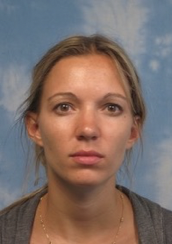
Welcome Melinda!

Melinda Mischler is joining the CIG and DBC Admin Team!
Previously, Melinda worked at EPFL for different laboratories.
“I’m very excited to get started and join the department!“
Welcome Melinda!
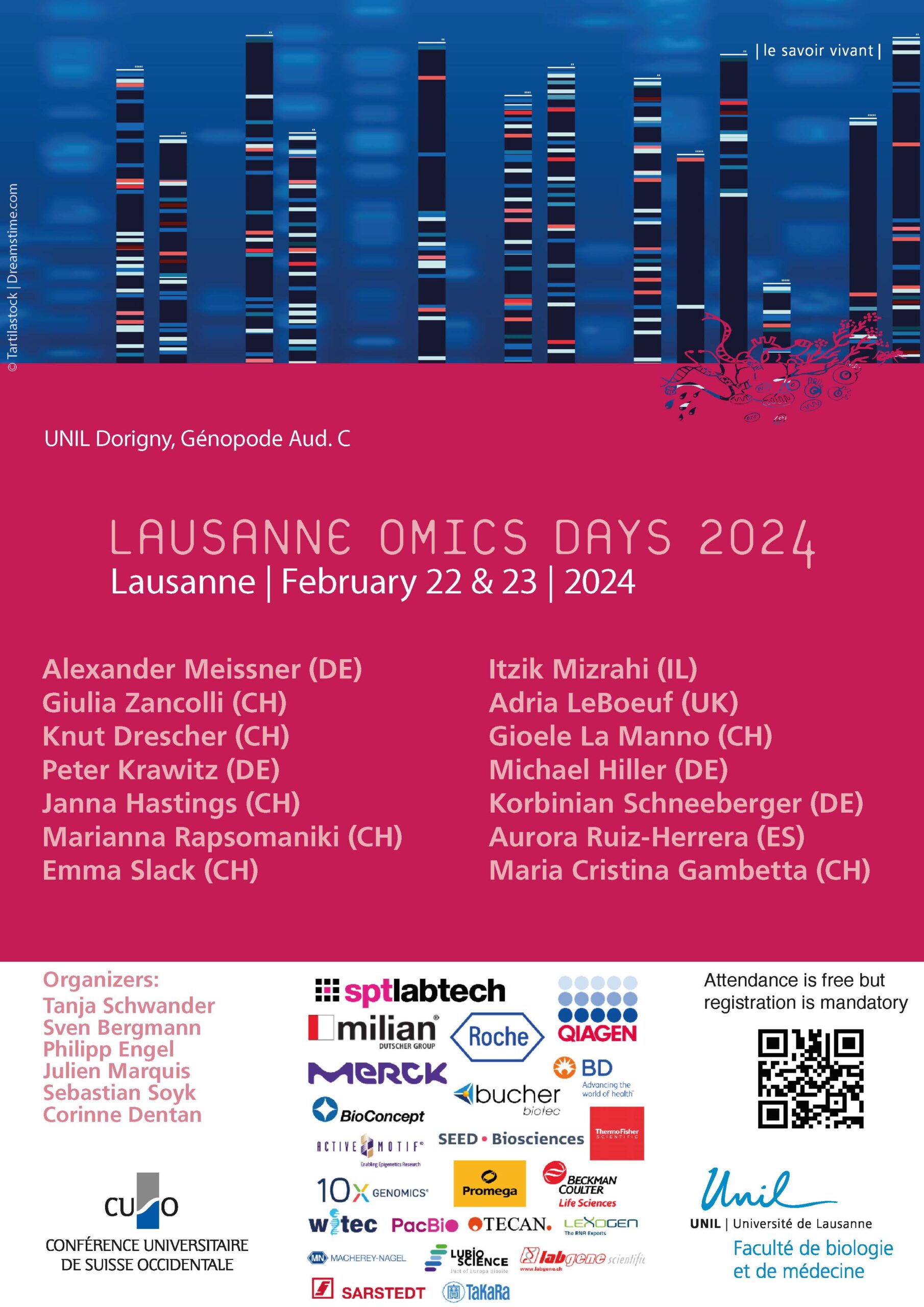
This year, the scope of the Lausanne Genomics Days has broadened since it becomes the Lausanne Omics Days. It is still a 2-days international conference meant to share advances in genomics and their impact on biological research, applied to a wide range of topics(it does involve 5 UNIL departments CIG, DBC, DBMV, DEE, and DMF).
It will take at UNIL / Genopode on February Thursday 22nd and Friday 23rd.
The conference offers 4 sessions:
For detailed program and more information, please visit the event webpage
Registration is FREE of charge. Still, it is mandatory for organization purpose, in particular ensuring that there will not be food wasted (coffee breaks, lunch and apero are offered).
HERE is the direct link for registration
Attendance is worth 0.5 ECTS
Best regards
Julien Marquis, on behalf of the L0D2024 organization team
Head of Lausanne Genomics Technologies Facility (GTF)
Monday 12:15, Génopode, auditorium B
Monday January 15, 2024
Pedro Beltrao,
ETHZ, Zurich, CH
«The genetics of human trait variation – from atoms to the organism»
Host: Jolanda van Leeuwen
Monday January 22, 2024
Ana Marija Jakšić,
EPFL, Lausanne, CH
«Genetics shape chaos-like individuality in learning in Drosophila melanogaster»
Host: Richard Benton
Monday February 19, 2024
David Gatfield,
CIG, University of Lausanne, CH
«Ribosomal emancipation, from triplet code to hub for cellular sensing and decision-making»
Host: Christian Fankhauser
Monday February 26, 2024
Olivier Pertz,
University of Bern, CH
«Self-organisation of MAPK signaling dynamics in cell collectives»
Host: Aleksandar Vjestica
Monday March 18, 2024
Jason Rihel,
University College London, UK
«Sleep pressure modulates synapse dynamics in zebrafish»
Host: Paul Franken
Monday March 25, 2024
Matthieu Boulard,
EMBL, Rome, IT
«Causal roles of chromatin modifications in the mammalian embryo»
Host: Maria C. Gambetta
Monday April 15, 2024
Tina Perica,
University of Zurich, CH
«Systems Biochemistry – How do complex cellular functions emerge from biochemical properties?»
Host: Jolanda van Leeuwen
Monday April 22, 2024
Todd Streelman,
Georgia Institute of Technology, Atlanta, USA
«Cellular basis of bower building behavior in Malawi cichlid fishes»
Host: Johannes Larsch
Monday April 29, 2024
Manuel Mameli,
UNIL, DNF, Lausanne, CH
«The brain’s decoder of aversive signals»
Host: Sophie Croizier
Monday May 27, 2024
Pei-Hsuan Wu,
University of Geneva, CH
«Guardians of Male Reproduction: A Non-coding RNA Perspective»
Host: Maria C. Gambetta
Monday June 24, 2024
Dan Zhang,
Temasek Life Sciences Laboratory Limited, Singapore, SG
«ER-PM contacts: formation, function and regulation»
Host: Aleksandar Vjestica
The Génopode Retreat 2024 is scheduled September 5 & 6 (Thursday & Friday) in Leysin (Hotel Alpine Classic).
Monday 12:15, Génopode, auditorium B
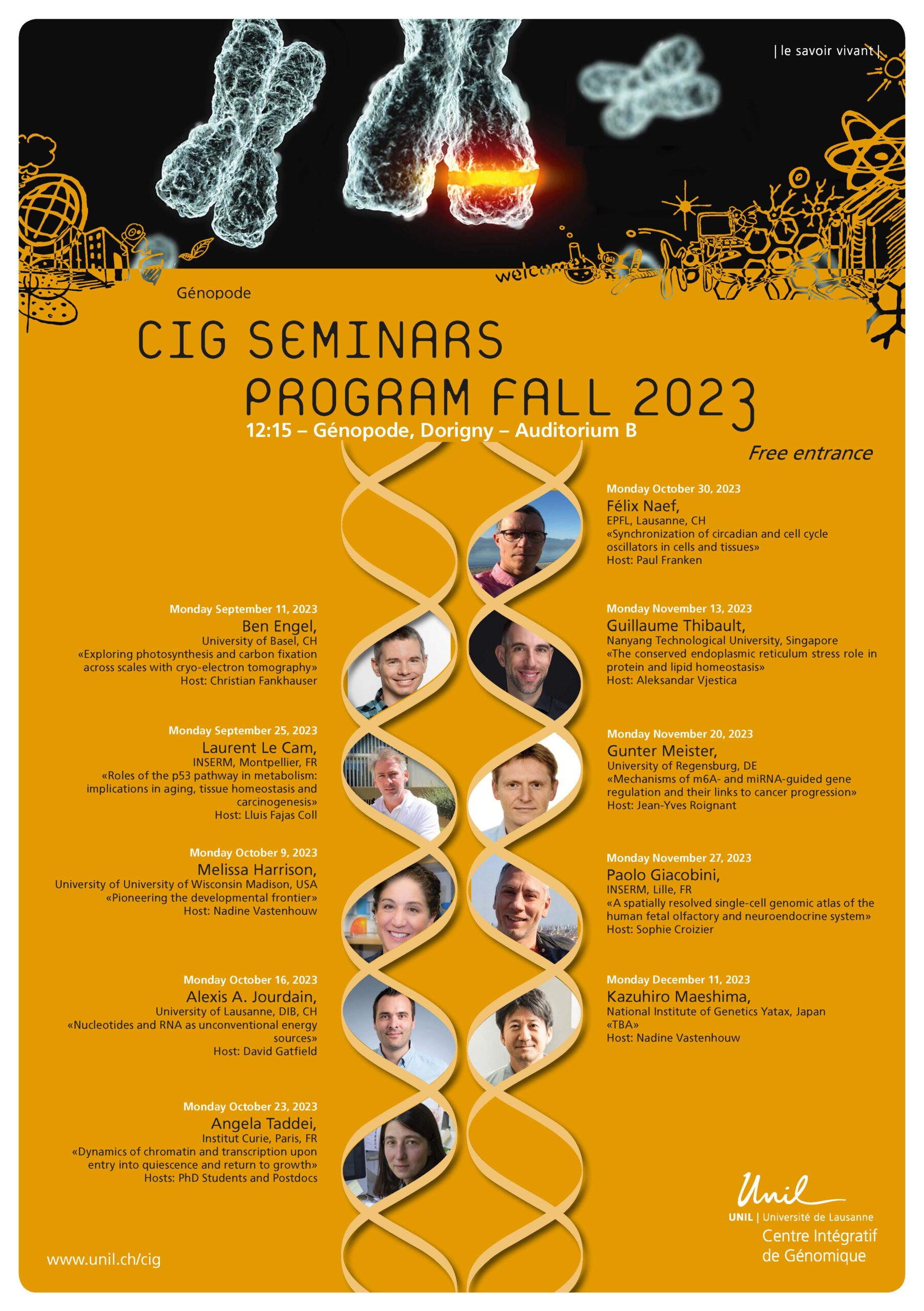
Monday September 11, 2023
Ben Engel,
University of Basel, CH
«Exploring photosynthesis and carbon fixation across scales with cryo-electron tomography»
Host: Christian Fankhauser
Monday September 25, 2023
Laurent Le Cam,
INSERM, Montpellier, France
«Roles of the p53 pathway in metabolism: implications in aging, tissue homeostasis and carcinogenesis»
Host: Lluis Fajas Coll
Monday October 9, 2023
Melissa Harrison,
University of Wisconsin, Madison, USA
«Pioneering the developmental frontier»
Host: Nadine Vastenhouw
Monday October 16, 2023
Alexis A. Jourdain,
University of Lausanne, Dpt. of Immunology, CH
«Nucleotides and RNA as unconventional energy sources”
Host: David Gatfield
Monday October 23, 2023
Angela Taddei,
Institut Curie, Paris, France
«Dynamics of chromatin and transcription upon entry into quiescence and return to growth»
Hosts: PhD Students & Postdocs
Monday October 30, 2023
Félix Naef,
EPFL Lausanne, CH
«Synchronization of circadian and cell cycle oscillators in cells and tissues»
Host: Paul Franken
Monday November 13, 2023
Guillaume Thibault,
Nanyang Technological University, Singapore
«The conserved endoplasmic reticulum stress role in
protein and lipid homeostasis»
Host: Aleksandar Vjestica
Monday November 20, 2023
Gunter Meister,
University of Regensburg, Germany
«Mechanisms of m6A- and miRNA-guided gene regulation and their links to cancer progression»
Host: Jean-Yves Roignant
Monday November 27, 2023
Paolo Giacobini,
INSERM, Lille, France
«A spatially resolved single-cell genomic atlas of the human fetal olfactory and neuroendocrine system»
Host: Sophie Croizier
Monday December 11, 2023
Kazuhiro Maeshima,
National Institute of Genetics Yata, Japan
«Chromatin organization and behavior during the cell cycle revealed by single-nucleosome imaging/tacking»
Host: Nadine Vastenhouw
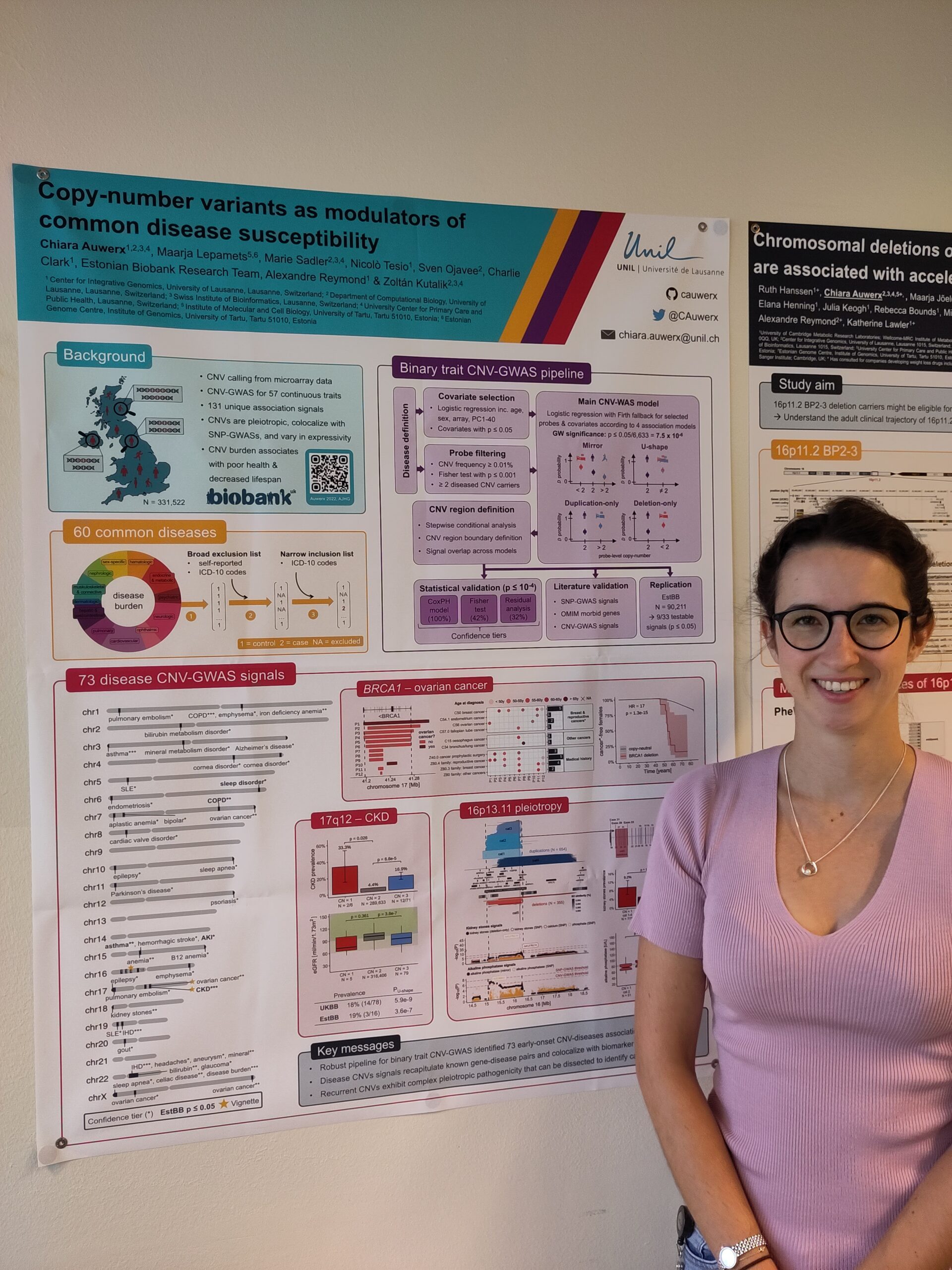
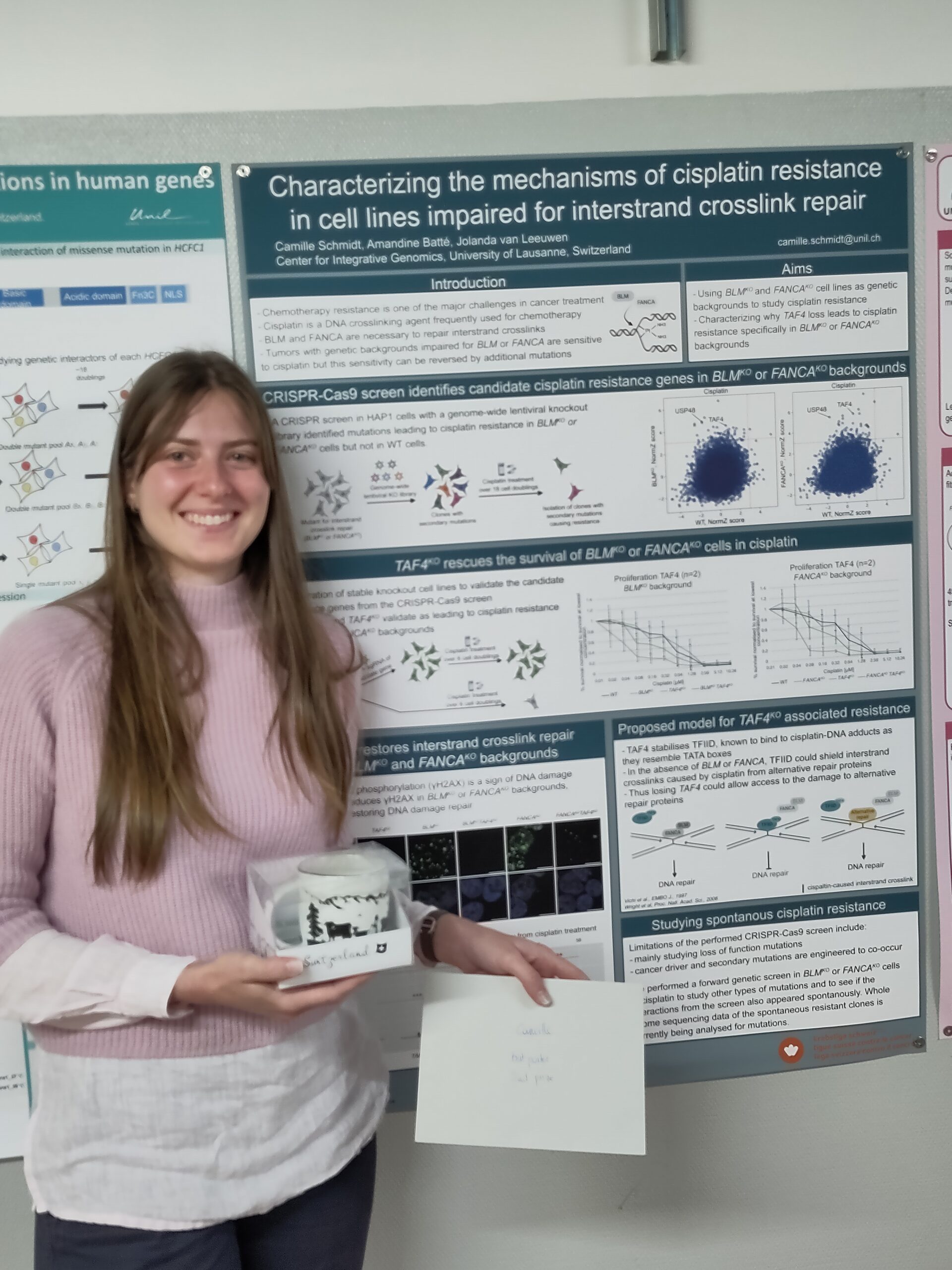
The prizes for the best posters were given this year at the Génopode Retreat in Leysin (August 24 & 25, 2023) to:
1st prize:
Chiara Auwerx (Kutalik & Reymond lab)
poster #4: “Copy-number variants as modulators of common disease susceptibility”
2nd prize:
Camille Schmidt (van Leeuwen lab)
poster #53: “Characterizing the mechanisms of cisplatin resistance in cell lines impaired for interstrand crosslink repair”
Congratulations!